Your Medication Routine May Be Working Against You Without You Knowing It
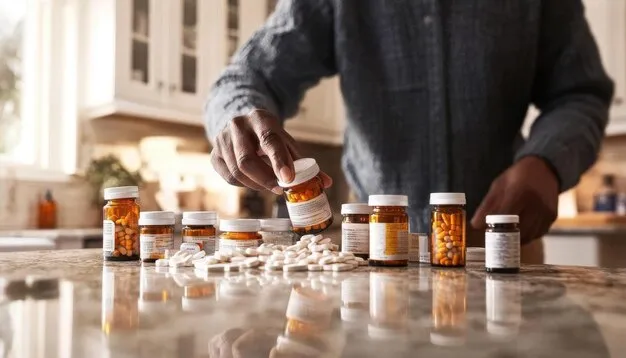
Photo: person organizing daily medications pills on kitchen counter with coffee, via img.freepik.com
You take your medication every day. You set a reminder, you follow the prescribed dose, and you consider yourself a compliant patient. So why does it sometimes feel like the medication is not doing what it should?
The answer may have nothing to do with the prescription itself — and everything to do with what surrounds it. The coffee you drink at 7 a.m., the high-fiber cereal you eat at breakfast, the afternoon run you take before dinner, and the timing of your evening meal all interact with the drugs in your system in ways that are rarely discussed during a standard appointment. Understanding these interactions is not a niche concern for pharmacology students. It is practical, actionable information that can meaningfully change how well your treatment works.
Absorption Is Not a Given
When a medication is prescribed, the dosage is calculated based on an assumed rate of absorption — how much of the active compound enters your bloodstream and reaches its target. That assumption is built around standard conditions. When the conditions change, absorption changes with them.
The gastrointestinal tract is not a neutral delivery system. It is an active, variable environment influenced by pH levels, transit speed, enzyme activity, and the presence of other compounds — including food, beverages, and supplements. Some medications depend on an empty stomach to absorb properly. Others require food to reduce irritation or to facilitate absorption of fat-soluble compounds. And some are significantly altered by specific dietary components in ways that are far from intuitive.
The Grapefruit Problem — and Why It Is Just the Beginning
Most people have heard that grapefruit interacts with certain medications. Fewer people know why, and even fewer realize how many other foods operate through similar mechanisms.
Grapefruit contains compounds called furanocoumarins that inhibit an enzyme in the intestinal wall responsible for breaking down many common drugs. When that enzyme is blocked, medication levels in the bloodstream can rise dramatically — sometimes to levels that cause toxicity. The effect can last up to 24 hours from a single glass of grapefruit juice, meaning that separating the juice from the pill by a few hours does not solve the problem.
Statins used to manage cholesterol, certain blood pressure medications, some antihistamines, and specific immunosuppressants are among the drug classes affected. If you take any of these and regularly consume grapefruit or its juice, it is worth raising that conversation with your provider.
But grapefruit is not the only culprit. Dairy products can bind to certain antibiotics — particularly tetracyclines and fluoroquinolones — forming compounds the body cannot absorb. High-fat meals increase the absorption of some HIV medications while reducing the effectiveness of others. Leafy greens rich in vitamin K can blunt the effect of blood thinners like warfarin. Each of these interactions follows its own logic, and most patients are never told about any of them.
Caffeine: The Invisible Variable in Your Morning Routine
For the majority of American adults, caffeine is a daily constant. It is also a pharmacologically active substance that interacts with several common medications in clinically significant ways.
Caffeine can reduce the absorption of certain thyroid medications when consumed in close proximity to the dose — a particularly relevant concern given how many people take levothyroxine first thing in the morning alongside their coffee. Some research suggests that waiting at least 30 minutes, and ideally 60 minutes, between taking thyroid medication and consuming caffeine meaningfully improves absorption.
Caffeine also affects the metabolism of certain psychiatric medications, including some antipsychotics, and can amplify the stimulant effects of medications like pseudoephedrine found in common decongestants. For patients managing anxiety, caffeine's interaction with the adrenal system may work directly against the therapeutic goals of their treatment.
Exercise Timing and Drug Metabolism
Physical activity changes circulation, body temperature, gastrointestinal motility, and enzyme activity — all of which affect how medications behave in the body.
For patients using insulin or other glucose-lowering agents, exercise timing is particularly consequential. Physical activity increases insulin sensitivity and glucose uptake, meaning that a workout can dramatically amplify the hypoglycemic effect of a medication taken around the same time. Patients who exercise in the late afternoon may need to adjust the timing or dose of medications taken earlier in the day, in consultation with their provider.
Transdermal medications — those delivered through patches applied to the skin — can absorb more rapidly during exercise due to increased skin temperature and blood flow. This includes patches used for pain management, nicotine replacement, and certain hormonal therapies. Exercising with a patch on an area that heats significantly may result in a faster-than-intended release of the medication.
Sleep Patterns and the Circadian Dimension of Drug Effectiveness
The body's internal clock governs far more than the sleep-wake cycle. It also regulates enzyme production, hormone secretion, blood pressure fluctuation, and cell division — all of which influence how medications are processed.
Chrono-pharmacology, the study of how drug effectiveness varies with time of day, has produced findings that are beginning to influence clinical guidelines. Blood pressure medications, for example, may be more effective when taken in the evening for certain patient populations, because blood pressure naturally rises in the early morning hours and that timing better positions the drug to counter that surge. Cholesterol-lowering statins are frequently recommended at bedtime because the liver produces more cholesterol at night.
Patients with irregular sleep schedules — including shift workers, those with insomnia, and those who frequently travel across time zones — may experience unpredictable medication effects simply because their circadian rhythms are disrupted. This is worth discussing with a provider, particularly for medications that are time-sensitive.
Building a Medication Routine That Actually Works
The goal is not to restructure your entire lifestyle around a prescription schedule. It is to make small, informed adjustments that allow your medications to perform as intended. A few practical starting points:
-
Read the full label and patient information insert. Instructions like "take with food" or "avoid antacids within two hours" exist for specific biochemical reasons. They are not suggestions.
-
Create a consistent daily window. Even medications without strict timing requirements benefit from consistency. The body adapts to predictable patterns, and steady drug levels tend to produce steadier therapeutic effects.
-
Tell your provider about your actual daily habits. When your provider knows you drink three cups of coffee before 9 a.m., exercise at 5 p.m., and eat your largest meal late in the evening, they can tailor their recommendations accordingly.
-
Ask your pharmacist specifically about food and timing. Pharmacists are an underutilized resource. A brief conversation at the pharmacy counter — or a scheduled medication review — can surface interactions your prescribing provider may not have had time to discuss.
-
Do not adjust doses or timing on your own. If you suspect your medication is not working effectively, the appropriate response is a conversation with your care team, not a self-directed change to the regimen.
At Ricci Clinic, we approach medication management as an ongoing dialogue, not a one-time transaction. If you have questions about how your daily routine may be affecting your prescriptions, we encourage you to bring those questions to your next appointment. Small adjustments, made with clinical guidance, can make a meaningful difference in how well your treatment serves you.